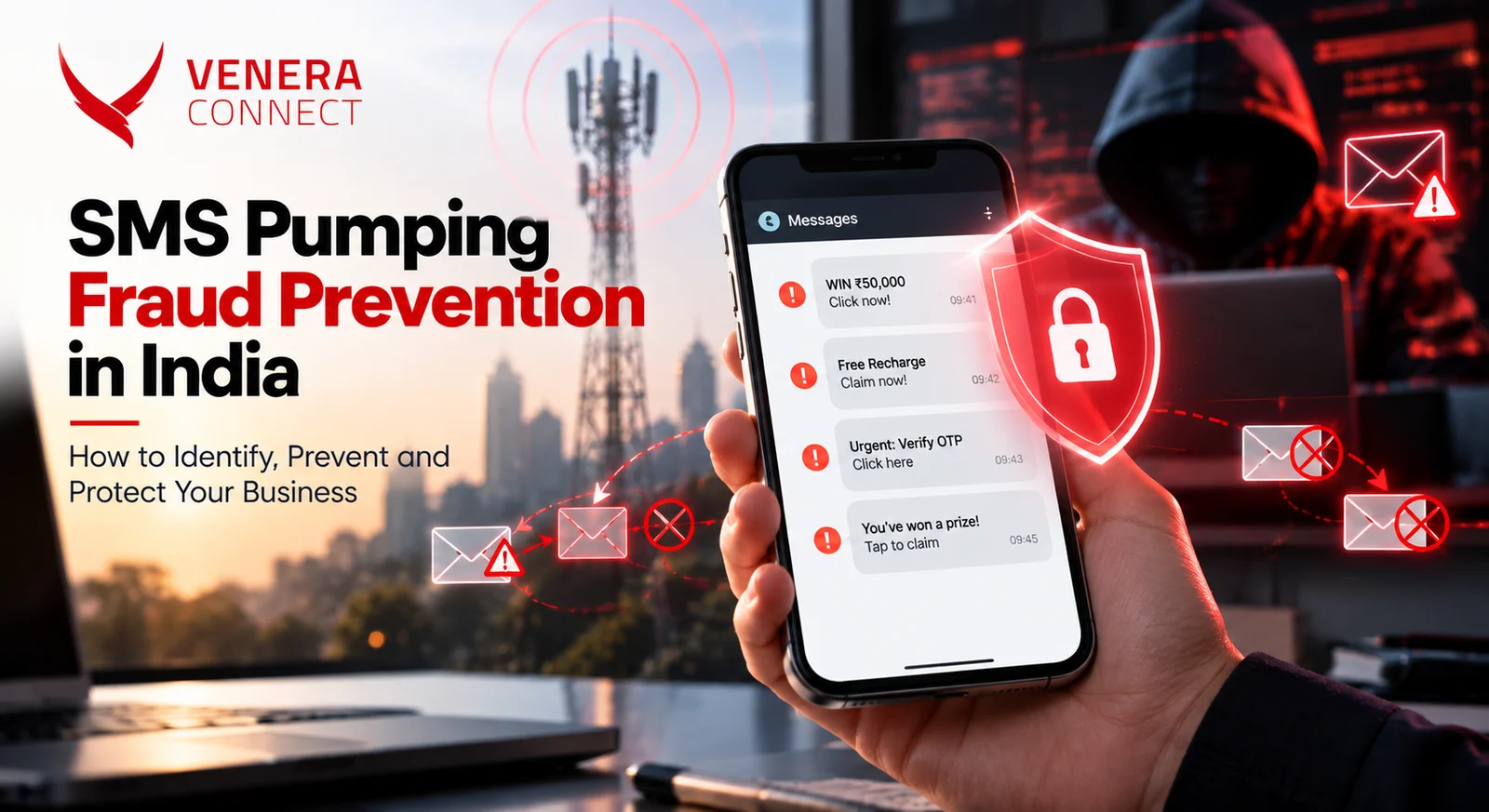
Every business that uses SMS-based OTPs for login, signup, or checkout has an attack surface most teams never think about: the OTP request form itself. SMS pumping, also called Artificially Inflated Traffic (AIT) fraud, turns that form into a money-draining machine. It has become one of the most costly, least-understood fraud vectors hitting businesses that rely on SMS verification.
Have your SMS costs spiked without a matching rise in real signups or conversions? Then read this closely.
What SMS Pumping Actually Is
SMS pumping works by exploiting the simple fact that most OTP flows will send a text to any phone number entered into the field. There is no check that a real, interested user is on the other end. Fraudsters, often using bot networks, automate mass submissions to your OTP endpoint using premium-rate or fraud-affiliated phone numbers. Every fake request your system sends a message to costs you real money. Meanwhile, the fraudster typically gets a cut of that telecom revenue on the receiving end.
The pattern is simple but brutally effective at scale. Fraudsters automate thousands of fake number submissions, let your OTP system dutifully fire a message to each one. Then they collect a share of the termination revenue generated by that traffic. Your business sees an inflated SMS bill and a pile of OTPs that no real user ever entered. That’s because there was no real user.
Why It’s Getting Worse, Not Better
A few forces have converged to make this more common through 2025 and into 2026:
- Bot automation is now cheaper and more sophisticated, making it trivial to script thousands of fake form submissions per hour.
- More businesses have moved core flows — login, checkout, password reset — behind SMS OTP, expanding the attack surface industry-wide.
- The fraud is often invisible until the bill arrives. Unlike a hacked account or a stolen card, SMS pumping doesn’t trigger an obvious alarm. It just quietly inflates a line item that many finance teams don’t scrutinize message-by-message.
For high-growth apps and e-commerce platforms running aggressive signup or promotional flows, fraudsters can exploit a single unprotected OTP endpoint for a meaningful, unbudgeted cost spike within hours.
Warning Signs to Watch For
- A sudden, sustained spike in OTP or SMS volume that doesn’t correlate with a marketing push, app store feature, or seasonal traffic increase
- A disproportionate share of OTP requests coming from a narrow range of country codes or number prefixes unrelated to your actual user base
- Low OTP completion rates — lots of messages sent, very few OTPs actually entered back into the app
- Repeated requests from the same IP address, device fingerprint, or session cycling through many different phone numbers
- SMS costs rising faster than signups, logins, or any other metric that should track with real OTP volume
How to Protect Your Business From SMS Pumping Fraud
Rate-limit OTP requests. Cap how many OTP messages a single phone number, IP address, or device can trigger in a short window. For example, allow three attempts per number per hour. This alone blocks the crudest bot patterns.
Add friction before the SMS fires, not after. A CAPTCHA or equivalent bot-detection check before the OTP goes out costs a fraudster far more time and money than one added after you have already sent the message. That’s because by then, you’ve already paid for it.
Use phone number validation and reputation checks. Many messaging platforms can flag numbers with a history of fraud association, invalid formatting, or premium-rate ranges before you ever send a message. That catches fraud before it becomes a cost.
Monitoring and Platform-Level Protection
Monitor OTP completion rate as a core metric, not just delivery rate. A healthy flow sees a high percentage of sent OTPs actually redeemed. A falling completion rate with rising volume is close to a fraud signature on its own.
Set spend alerts, not just monthly invoice reviews. Real-time or daily anomaly alerts on SMS spend catch a pumping attack in hours, not at the end of a billing cycle when the damage has already happened.
Consider app-based or WhatsApp-based verification as an alternative where it fits. For users who already have your app installed or have opted into WhatsApp, in-app push verification or WhatsApp OTP delivery can reduce reliance on open SMS endpoints. However, SMS should stay available as the universal fallback for users who don’t have either.
Work with a provider that actively filters traffic. A messaging platform with built-in fraud detection catches a large share of pumping attempts before they ever reach your bill. It bakes rate limiting, number reputation scoring, and anomaly monitoring into the API layer, so your engineers do not have to build it all from scratch.
Why This Belongs on Every Security Checklist, Not Just Marketing’s
Usually, finance (an unexplained cost spike) or engineering (unusual traffic patterns) discovers SMS pumping, not whoever owns the messaging budget day to day. That’s exactly why it persists. It falls between teams. Adding OTP fraud monitoring to your standard security review closes that gap. Treat it like login-attempt monitoring and payment fraud checks.
The OWASP automated threats project lists this kind of abuse among common web attacks. For OTP delivery with built-in safeguards, explore our SMS solution.
Frequently Asked Questions
What is SMS pumping fraud in simple terms?
It’s when fraudsters use bots to trigger large volumes of fake OTP or SMS requests to numbers they control (often premium-rate or fraud-affiliated). As a result, the business footing the SMS bill unknowingly pays for messages no real customer requested.
How do I know if fraudsters are targeting my business with SMS pumping?
Look for a spike in OTP volume without a matching rise in signups or logins. Also watch for a falling OTP completion rate and SMS costs concentrated among unusual country codes.
Can rate limiting alone stop SMS pumping?
It stops the crudest, highest-volume attacks, but sophisticated fraud rings rotate numbers and IPs to get around simple limits. Combining rate limiting with CAPTCHA-style friction, number reputation checks, and real-time spend monitoring is far more effective than any single control alone.
Is SMS pumping fraud illegal?
It typically violates telecom regulations and the terms of service of both the messaging platform and the phone number’s telecom operator. It can also constitute fraud under applicable law. But because fraudsters often run it across borders through automated systems, prevention on your side remains the most reliable protection.
Does switching to WhatsApp OTP eliminate this risk?
It reduces exposure for users who already have WhatsApp opted in, since WhatsApp’s messaging has its own verification layer. However, it doesn’t eliminate the need for SMS as a fallback for users without WhatsApp access. So the underlying SMS endpoint still needs protection.
A messaging platform that combines number validation, rate limiting, and real-time spend alerts at the API level catches most SMS pumping attempts before they ever reach an invoice. Want an exposure check on your current OTP flow? Venera Connect can run a quick audit against your last 30 days of SMS traffic.