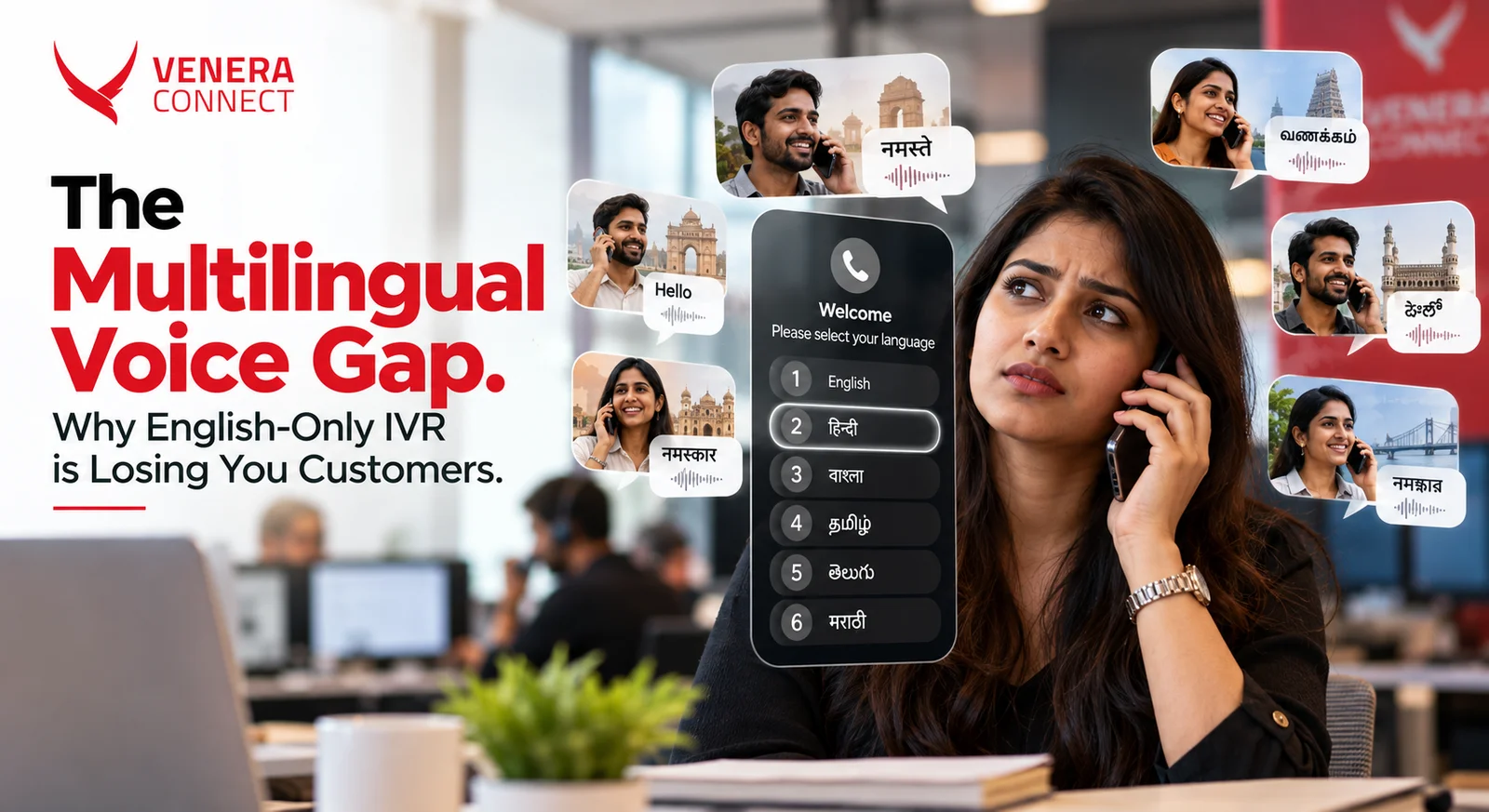
A customer in a smaller city calls a support line with a genuine problem. The IVR greets them in English. They understand enough to get by, but not enough to feel confident. So they either struggle through, hang up, or wait for a callback that may or may not come. Multiply that across every regional-language-first caller a business has. Then “English-only” phone support quietly costs more conversions and goodwill than most businesses realize. That gap between English-only support and genuine multilingual voice support is exactly what’s driving customers away.
Why This Is a Bigger Deal Than It Sounds
India isn’t a single-language market pretending to be one. Hundreds of millions of customers prefer service in a regional language over English. Also, the way most people actually speak isn’t pure Hindi or pure English either. It’s a natural mix of both, switching mid-sentence. “Sir, aapka order deliver ho gaya hai” is how a real conversation sounds, not a textbook line. A voice system built only for clean, formal English is underserving a large share of callers by default, not by exception.
The Business Case
This isn’t just about accessibility, though that matters too. Customers respond better, understand faster, and convert at higher rates when you speak to them in the language they actually think in. As businesses expand into tier-2 and tier-3 markets, English fluency drops and regional-language preference rises. So voice support that only works in English becomes a growth ceiling, not just a service gap.
Not All “Multilingual Voice” Claims Are Actually Multilingual
This is where it’s worth slowing down, because vendors use the label loosely. There are two very different ways a voice system can “support” a regional language:
Translate-and-speak. The system runs its logic in English, translates the output to the target language as text, and reads that text aloud. Technically correct words come out, but it sounds like someone reading a translated document, not a person talking. It feels stiff and oddly paced, and callers notice within a sentence or two.
Genuinely native. The system handles the language directly, including the code-switching that real conversations involve. As a result, it sounds like one consistent voice having a natural conversation rather than two systems stitched together.
Two details give this away quickly. First, check whether the voice and persona stay consistent when the conversation shifts languages. Also, check whether there’s a noticeable delay before the regional-language response compared to the English one. A bot that pauses awkwardly in Tamil but responds instantly in English feels broken, even when every word it says is technically accurate.
What Multilingual Voice Support Looks Like in Practice
The highest-value use cases for multilingual voice aren’t exotic. They’re the repetitive, high-volume calls that make up most support and operations volume:
- Answering common questions (FAQs) in the caller’s language of choice
- Order status and delivery tracking updates
- Payment reminders and EMI alerts
- Appointment scheduling and confirmations
- Basic troubleshooting before escalating to a human
None of this requires a human agent fluent in nine languages. It requires a system that genuinely is.
What to Look for Before You Commit
A few practical checks save a lot of post-launch disappointment. First, ask for a live demo call in your actual target language rather than a scripted reading. Then confirm the same voice and personality carries across every language you need. Finally, resist the temptation to chase the longest language list. Strong, natural coverage of the eight or nine languages your customers actually speak beats shaky coverage of twenty-five.
Where Venera Connect Fits In
This is precisely what Venera Connect’s Voice Solution aims to address. Its Text-to-Speech capability delivers messages in a human-like voice with the ability to convert into Indian regional languages. Its Voice Broadcast (OBD) offering exists specifically to eliminate language and literacy obstacles by delivering tailored, localized content your audience actually understands , not a one-size-fits-all English script.
Ready to stop losing customers at the “please continue in English” prompt? Get in touch with Venera Connect to get started.