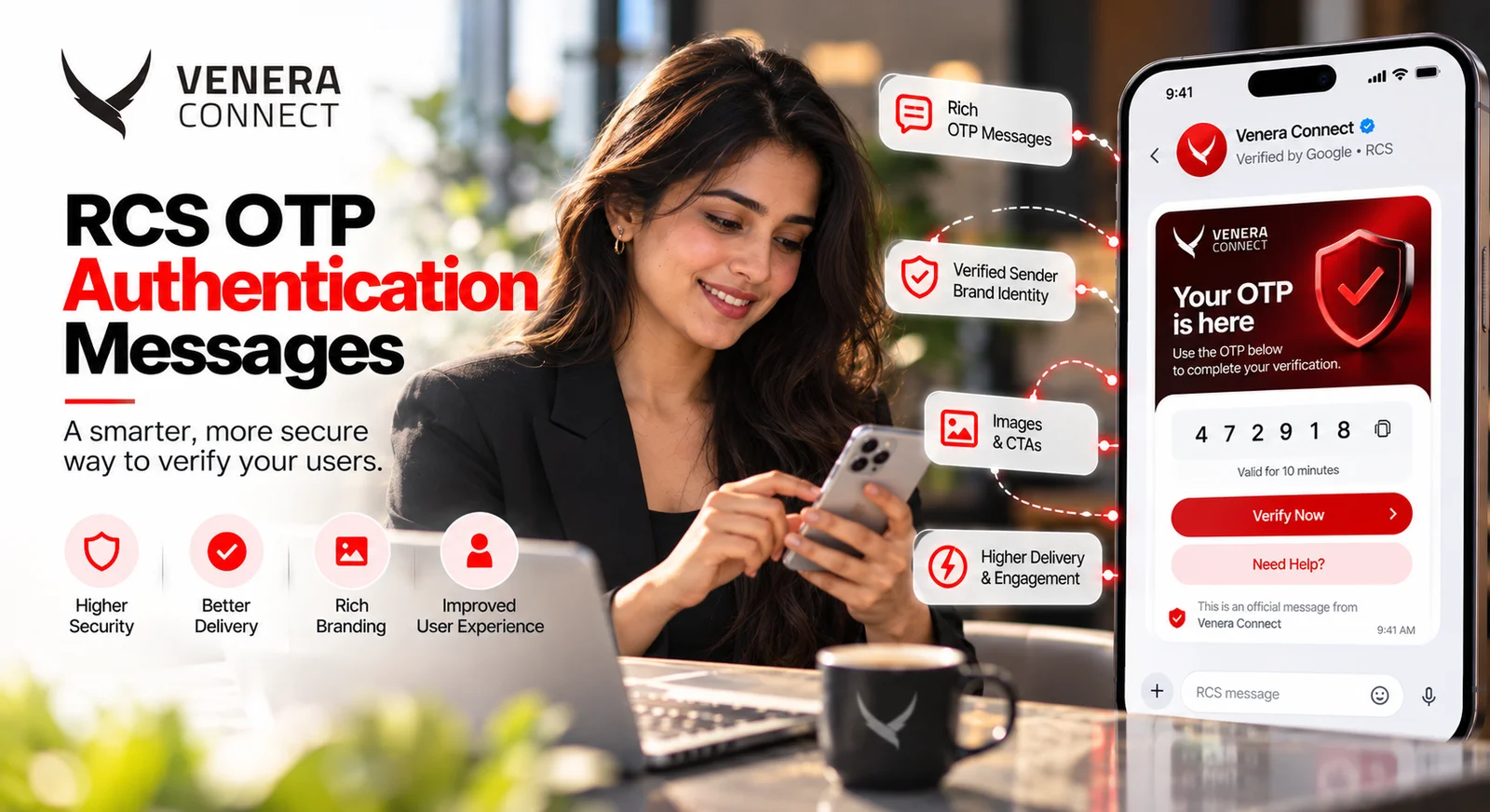
An OTP delivered by plain SMS looks like every other SMS — six digits, a generic short code, no visual indication of which business actually sent it. RCS offers a genuinely different approach to authentication messaging, and as its reach in India expands, it’s worth understanding whether it’s ready to take on a bigger share of OTP delivery.
What Makes RCS OTP Different From SMS OTP
An RCS authentication message can carry a verified sender name and logo, so the customer sees a recognizable, branded business identity rather than a generic short code. RCS messages also support richer formatting and structure — a verification message can include clear visual layout and explicit context about why the code was sent. Critically, RCS delivery uses an end-to-end encrypted, carrier-authenticated channel in its standard implementation, adding a layer of message integrity plain SMS doesn’t have by default.
Why This Matters for Security, Not Just Experience
Phishing resistance improves with verified branding. A verified business sender makes it measurably harder for a fraudulent message to convincingly impersonate a legitimate OTP request.
Message integrity is stronger than SMS’s legacy protocols. SMS’s underlying signaling infrastructure has known interception vulnerabilities that RCS’s more modern transport reduces.
It doesn’t inherently stop SMS pumping-style fraud. RCS OTP still needs the same underlying safeguards — rate limiting, number validation, spend monitoring.
Where RCS OTP Makes Sense Today
High-value, high-trust transactions. BFSI login and transaction verification, where the visual trust signal meaningfully reduces phishing risk.
Customers already engaged through RCS for other messaging. Extending the same verified identity to authentication reinforces a consistent presence.
Markets and devices where RCS reach is now solid. With Android coverage broad and iPhone support expanding, RCS OTP is increasingly viable as a primary channel.
Why SMS Still Needs to Stay in the Picture
RCS reach, while growing fast, still isn’t universal. An OTP flow that only supports RCS will fail for some real share of customers.
SMS remains the most dependable fallback. A failed OTP delivery directly blocks a customer from completing whatever they were trying to do.
Authentication flows should be evaluated for security and reliability together. A layered SMS-RCS-voice approach tends to outperform betting everything on any single channel.
Getting Started With RCS Authentication
Verify RCS reach against your actual customer base first. Check what share of your customers are on RCS-capable devices before shifting OTP delivery.
Build automatic SMS fallback into any RCS OTP flow from day one. Treat this as non-negotiable.
Keep the same fraud safeguards regardless of channel. Rate limiting, number validation, and spend monitoring should apply uniformly.
Ready to test branded codes? Explore our RCS messaging solution, or read Google’s official RCS Business Messaging documentation to see how verified senders work.
Frequently Asked Questions
Is RCS OTP more secure than SMS OTP?
It offers meaningful security advantages — verified sender branding and a more modern, encrypted transport — but isn’t a complete replacement for underlying fraud safeguards like rate limiting.
Can I use RCS OTP for all my customers right now?
Not yet universally — a production authentication flow should always include an SMS fallback for customers not yet reachable on RCS.
Does RCS OTP cost more than SMS OTP?
RCS messaging generally sits in its own pricing tier — check current pricing with your messaging provider before shifting significant OTP volume.
Does RCS OTP protect against SMS pumping-style fraud?
Not on its own — rate limiting and number validation are still required alongside RCS’s transport-level security improvements.
Moving OTP delivery toward RCS makes sense where reach supports it, but it works best as part of a layered strategy — RCS where available, SMS as the dependable fallback. Venera Connect’s verification APIs handle that channel selection and fallback automatically.