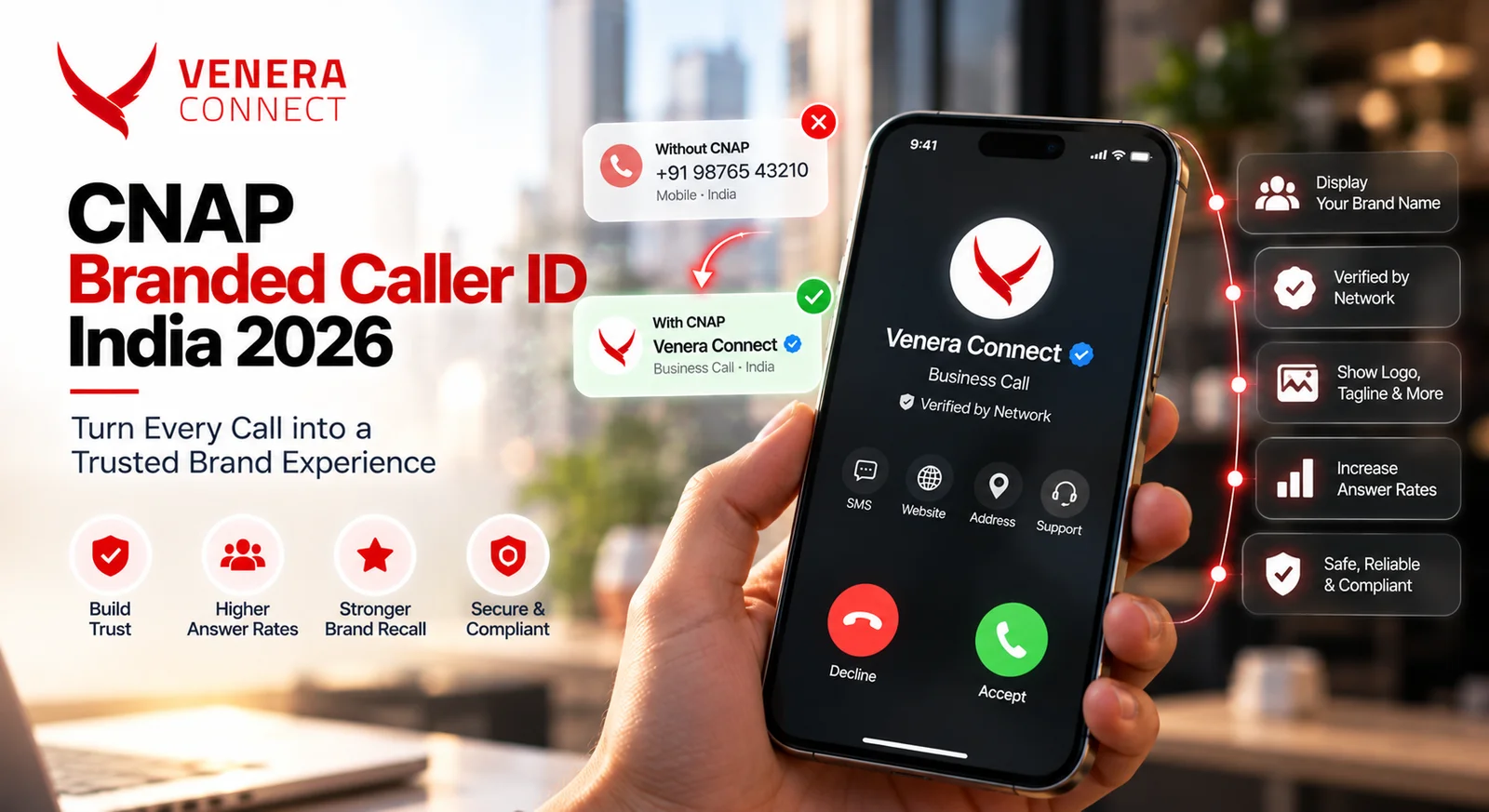
For years, every business calling a customer in India faced the same silent problem. The screen showed an unrecognized 10-digit number, the customer assumed it was spam, and the call went unanswered. India’s rollout of CNAP — Calling Name Presentation — is the first nationwide, telecom-level fix for exactly that problem, and it changes how every business needs to think about outbound calling in 2026. This guide explains what CNAP in India means for every business that calls customers.
What CNAP in India Actually Is
CNAP displays a verified caller name on the recipient’s phone screen for every call. The name comes from KYC (know-your-customer) telecom records rather than a crowdsourced app database. It also works inside the network, so the customer never needs a separate app.
For customers, that means a call from a bank, delivery service, or business displays as a recognizable name instead of an unfamiliar number, without them needing to do anything on their end. For businesses, it means the guesswork around whether customers will even recognize a call, let alone answer it, changes fundamentally.
Why This Matters for Every Business That Calls Customers
Answer rates have been quietly declining for years as spam and scam calls trained customers to ignore unknown numbers by default. A verified name on the screen directly addresses the root cause of that avoidance.
It also separates legitimate businesses from spoofed or fraudulent calls. Because CNAP relies on verified KYC registration, it makes it harder for scam calls to convincingly impersonate a real business.
As a result, it changes the calculus for outbound calling campaigns. Many businesses moved sales follow-ups, delivery calls, and appointment reminders to SMS or WhatsApp because “customers won’t answer an unknown call.” A verified, recognizable name makes those calls viable again.
What Businesses Must Do for CNAP in India
Register and verify your business identity with your telecom or voice API provider. CNAP display names come from registered KYC information.
Next, keep your registered name recognizable and consistent. A verified name that doesn’t match your customer-facing brand undercuts the trust benefit CNAP aims to provide.
Audit which numbers you’re calling from. Register every number that reaches customers, not just the primary support line.
Don’t treat this as a one-time setup. As CNAP coverage expands across networks and device types through 2026, periodically verify your caller display is rendering correctly.
CNAP Doesn’t Replace Other Verification and Privacy Tools
CNAP is a complement to, not a replacement for, other tools already in use. Number masking still matters for privacy-sensitive two-way calls between customers and delivery partners, where the goal isn’t brand recognition but protecting both parties’ real numbers. Click-to-call still matters for reducing friction on the customer-initiated side. CNAP specifically improves the business-initiated outbound call. That call used to show up as an anonymous number, so people ignored it.
Why CNAP in India Signals a Bigger Trust Trend
CNAP is part of a broader pattern across every channel in 2026. Think of verified WhatsApp business profiles, verified RCS senders, and now verified caller names for voice calls. Businesses that register and verify properly get a real, measurable trust advantage over those that don’t.
For the official framework, visit the Telecom Regulatory Authority of India. To pair verified calling with branded messaging, explore our business voice solutions.
Frequently Asked Questions
Do customers need to install an app to see CNAP caller names?
No — CNAP works at the network level and displays automatically on supported devices and operators, without requiring the customer to install anything.
How is CNAP different from third-party caller ID apps?
Third-party apps rely on crowdsourced or scraped number databases and require installation. CNAP is an official, telecom-network-level service built on verified KYC business registration.
What happens if my business doesn’t register for CNAP?
Calls will likely continue to display as an unrecognized number, putting you at the same answer-rate disadvantage businesses have faced for years.
Does CNAP stop spam and scam calls completely?
No single measure eliminates spam entirely, but verified caller identification meaningfully raises the difficulty of convincingly impersonating a legitimate business.
Registering and verifying your business for CNAP, alongside your WhatsApp and RCS sender verification, is quickly becoming table stakes rather than a nice-to-have. Venera Connect can walk through what’s needed to get your outbound calls showing a verified name.